


Managing BOMs
In manufacturing, every discipline delivers its own bills of materials: mechanical, electrical, pneumatic, software. The challenge is merging those separate EBOMs into one workable production bills of materials, without any parts falling through the cracks.
One manageable bill of materials from multiple EBOMs
"Is this on the electrical BOM?"
Bills of materials management in manufacturing means in practice: a mechanical engineer delivering his EBOM, an electrical engineer with a different list, and a work planner trying to manually merge them in Excel. Overlapping parts, conflicting version numbers, parts that appear in one list but not the other. And when one discipline pushes through a revision, it starts all over again. The result: discrepancies that only come to light during assembly. A missing part. A version that doesn't match. A production order grinding to a halt while the deadline approaches.
Baseboard imports the EBOMs from all involved disciplines and automatically consolidates them into one MBOM, organized according to the actual assembly sequence. Overlapping parts are recognized and merged, conflicts are flagged. The work planner reviews the result and publishes. This means nobody has to manually puzzle out which part comes from which discipline. The link with BOM management ensures that changes in an EBOM are immediately visible in the consolidated bills of materials.
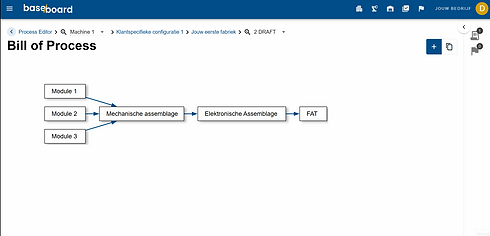

Per discipline, it is clear which parts have been supplied and whether there are conflicts with other disciplines. This makes change management simpler: if something changes in the electrical bills of materials, you immediately see which other disciplines are affected. Less searching during revisions, less risk of production stoppages due to a missing part.
