


Stuklijsten consolideren
Stuklijsten consolideren vereist het samenvoegen van verschillende engineering-stuklijsten tot één praktische assemblage-volgorde, maar handmatige samenvoeging van EBOM's uit verschillende disciplines is tijdrovend en foutgevoelig.
Één werkbare stuklijst uit meerdere EBOM's
"Staat dit op de elektrische stuklijst?"
Stuklijsten consolideren is een complexe puzzel waarbij mechanical, electrical, software en pneumatiek engineering elk hun eigen EBOM's (Engineering Bills of Materials) aanleveren. Deze verschillende stuklijsten bevatten vaak overlappende onderdelen, verschillende versienummers en zijn georganiseerd vanuit engineeringperspectief in plaats van assemblagevolgorde. Handmatig samenvoegen van deze lijsten is tijdrovend en foutgevoelig, vooral wanneer wijzigingen in één discipline impact hebben op andere onderdelen. Zonder geautomatiseerde consolidatie en conflict-detectie ontstaan er discrepanties die pas tijdens assemblage worden ontdekt, wat leidt tot productieverliezen en vertraging.
Baseboard importeert automatisch alle EBOM's van verschillende disciplines en detecteert overlappende onderdelen en versie-conflicten. Het systeem consolideert deze tot één Manufacturing BOM (MBOM) die georganiseerd is volgens de werkelijke assemblage-volgorde. Door intelligente mapping worden onderdelen van verschillende disciplines automatisch gekoppeld en gevalideerd. Wijzigingen in één EBOM worden direct doorvertaald naar de geconsolideerde stuklijst, waardoor alle betrokken disciplines altijd werken met consistente informatie.
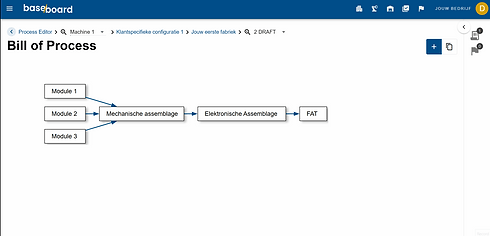

Het systeem bouwt een overzicht op waarin duidelijk wordt welke onderdelen van welke engineering-discipline afkomstig zijn. Dit versnelt niet alleen troubleshooting wanneer er problemen zijn, maar ook change management processen omdat direct zichtbaar is welke disciplines betrokken moeten worden bij wijzigingen. Door assemblage-logica toe te passen wordt de stuklijst automatisch geoptimaliseerd voor efficiënte productie-flow.
